
Sewage Ejection Pumps
You'll Be Glad You Called Us First!
Understanding Sewage Ejection Pumps: A Guide for Efficient Waste Management
Sewage ejection pumps are indispensable components in modern waste management systems, especially in homes and buildings where gravity alone is insufficient to move wastewater from fixtures to the main sewer lines or septic tanks. This article explores the function, importance, and considerations of sewage ejection pumps, providing homeowners and property managers with essential knowledge to ensure their plumbing systems operate efficiently and hygienically.
We include great service guarantees on all our pump work as well.
Functionality of Sewage Ejection Pumps
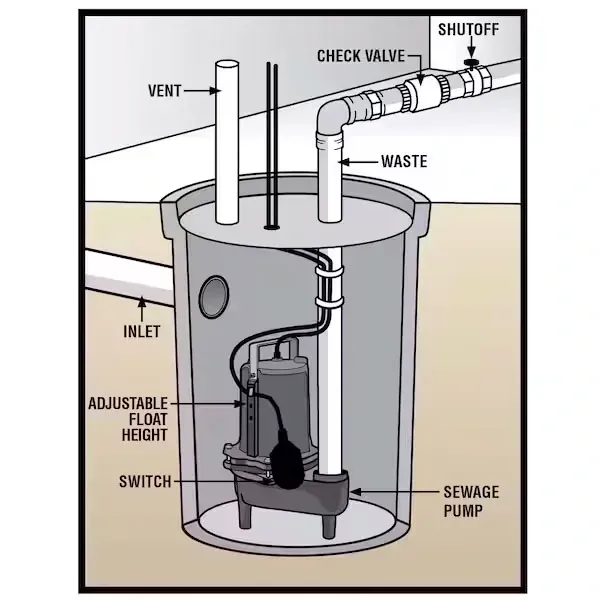
Sewage ejection pumps are designed to handle and transport waste and wastewater from lower-level sources like bathrooms, laundry rooms, and kitchens located below the grade of the main sewer or septic line. These pumps collect sewage in a holding tank, and once the waste level reaches a certain point, the pump is activated, ejecting the contents to the sewer line or septic system. This process is crucial for preventing backflows and maintaining a clean, odor-free environment in areas susceptible to drainage issues.
Key Components and Operation
Holding Tank: Also known as a basin or sump, the holding tank is where wastewater from various drains collects. It's typically buried underground and made from heavy-duty materials to withstand the corrosive nature of sewage.
Pump and Motor: The pump, powered by an electric motor, is the heart of the system. It’s responsible for moving the collected sewage out of the tank and towards the sewer or septic system.
Float Switch: This component triggers the pump to turn on when the wastewater reaches a pre-set level and turns it off once the pumping is complete, ensuring automatic operation.
Importance of Sewage Ejection Pumps
Hygiene and Health: By efficiently removing waste, sewage ejection pumps prevent the buildup of sewage in living spaces, reducing the risk of health issues and unpleasant odors.
Property Value: Proper waste management systems, including effective sewage ejection, are crucial for maintaining and even increasing property value.
Versatility: These pumps allow for the addition of bathrooms, kitchens, or laundry rooms in areas not serviced by gravity-fed sewer lines, enhancing the usability and convenience of a property.
Selection and Maintenance Considerations
Capacity and Power: Choose a pump with the right capacity and power to handle the expected volume of waste, considering the number of fixtures it will serve and the distance to the main sewer line.
Durability: Opt for pumps made with corrosion-resistant materials to ensure longevity, given the harsh environment they operate in.
Regular Maintenance: Regular inspections and maintenance are vital to prevent clogs, wear, and potential failures. This includes checking the pump, float switch, and cleaning the tank to remove solids that may settle at the bottom.
Conclusion
Sewage ejection pumps play a critical role in modern plumbing systems, especially in residential and commercial properties with below-grade wastewater sources. Understanding their functionality, importance, and maintenance needs is crucial for property owners and managers to ensure efficient and hygienic waste disposal. By selecting the appropriate system and adhering to regular maintenance practices, one can ensure a seamless, odor-free, and sanitary living or working environment, safeguarding both health and property value.